This guide walks you through how candidate referrals work on Refari for recruitment agencies, from the moment a referral reaches you through to rewarding a placement. It is the central place to understand the whole process, and it links out to the detailed how-to articles for each step. If you run an internal recruitment function rather than an agency, a separate guide covers your setup.
Candidate referrals turn the people who already know and trust your agency into a steady source of quality candidates. A referrer, who might be a past candidate, an alumnus or a contact, sends a candidate your way. Refari makes that referral traceable, keeps the referrer informed as the candidate progresses, and shows the reward owed if the candidate is placed.
How a candidate referral reaches you
There are two ways a candidate referral comes in.
Through your job board ("Refer a Friend")
Every job, and your board itself, carries a "Refer a Friend" option. The referrer can either refer the job to someone they think is a good fit, or refer a person to your agency directly. Either way Refari creates a branded, trackable link, so the referral is credited to the right referrer automatically.
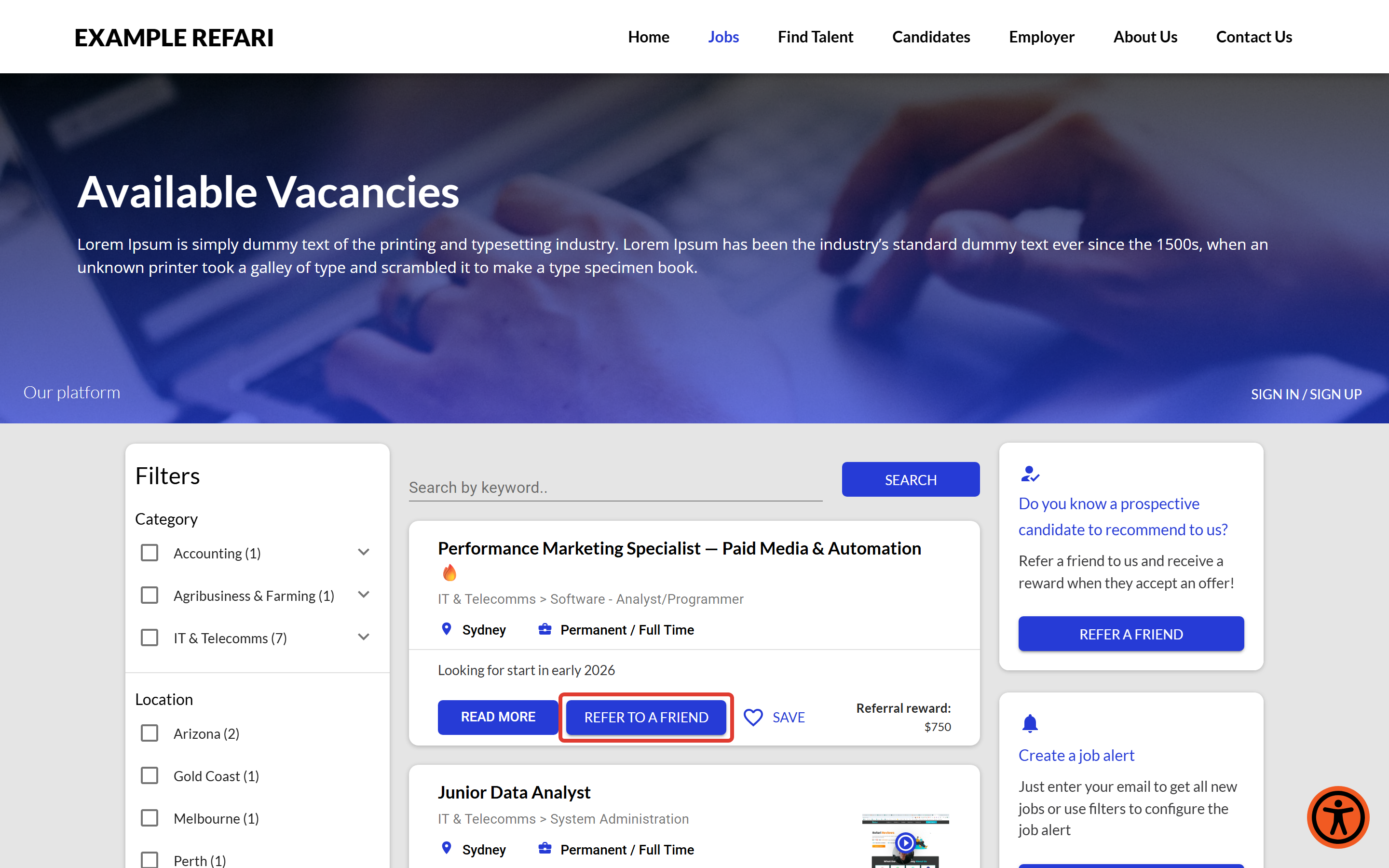
To see exactly what the referrer and the prospective candidate experience, read What do prospective candidates see when they receive a job referral ↗. You can also send people straight to the refer-a-friend popup with a direct link, which is handy for email campaigns: see How to create a direct link to the refer a friend popup ↗. You can also embed a standalone Referral widget anywhere on your site, such as a careers page, so people can refer without browsing your jobs: see Referral Widget - How to install it and the customisation available ↗.
Logged by you (a "direct referral")
When a referral reaches you another way, by phone, email or in person, you log it so the referrer still gets the tracking and transparency that a board referral would. If you use JobAdder, the easiest way is the Refari partner action embedded in JobAdder: it lets you pick the brand from a dropdown, so the referral is always attributed correctly. See How to log a direct referral in JobAdder ↗.
Setting up your referral scheme
Your scheme is configured once, under "Settings > Company Settings", and there is a step-by-step walkthrough in Setting up your referral scheme in Refari ↗. The key things to set are:
- Your reward fees. A default reward, an optional percentage of the expected fee, optional per work-type amounts, and a maximum cap. How these combine is covered in the next section. For a plain-English explanation of how the different reward types work together, see What are dynamic referral rewards and how do they work for recruitment agencies ↗. When you are ready to set or adjust the amounts, How to edit Referral Rewards ↗ walks you through it.
- Your candidate ownership period. How long a referrer "owns" a candidate they referred. You can choose 3, 6, 12, 18 or 24 months. See What is candidate ownership period for referrals and how does it work ↗.
- Your referral scheme terms and conditions. Add the URL of your scheme's terms so referrers can read them from your board. The steps for adding that URL are in How to add Referral scheme terms and conditions to your Refari Job board ↗. If you do not yet have terms written, our example terms and conditions ↗ give you a starting point.
- Your display options for the "Refer a Friend" block and whether the reward is shown on your board.
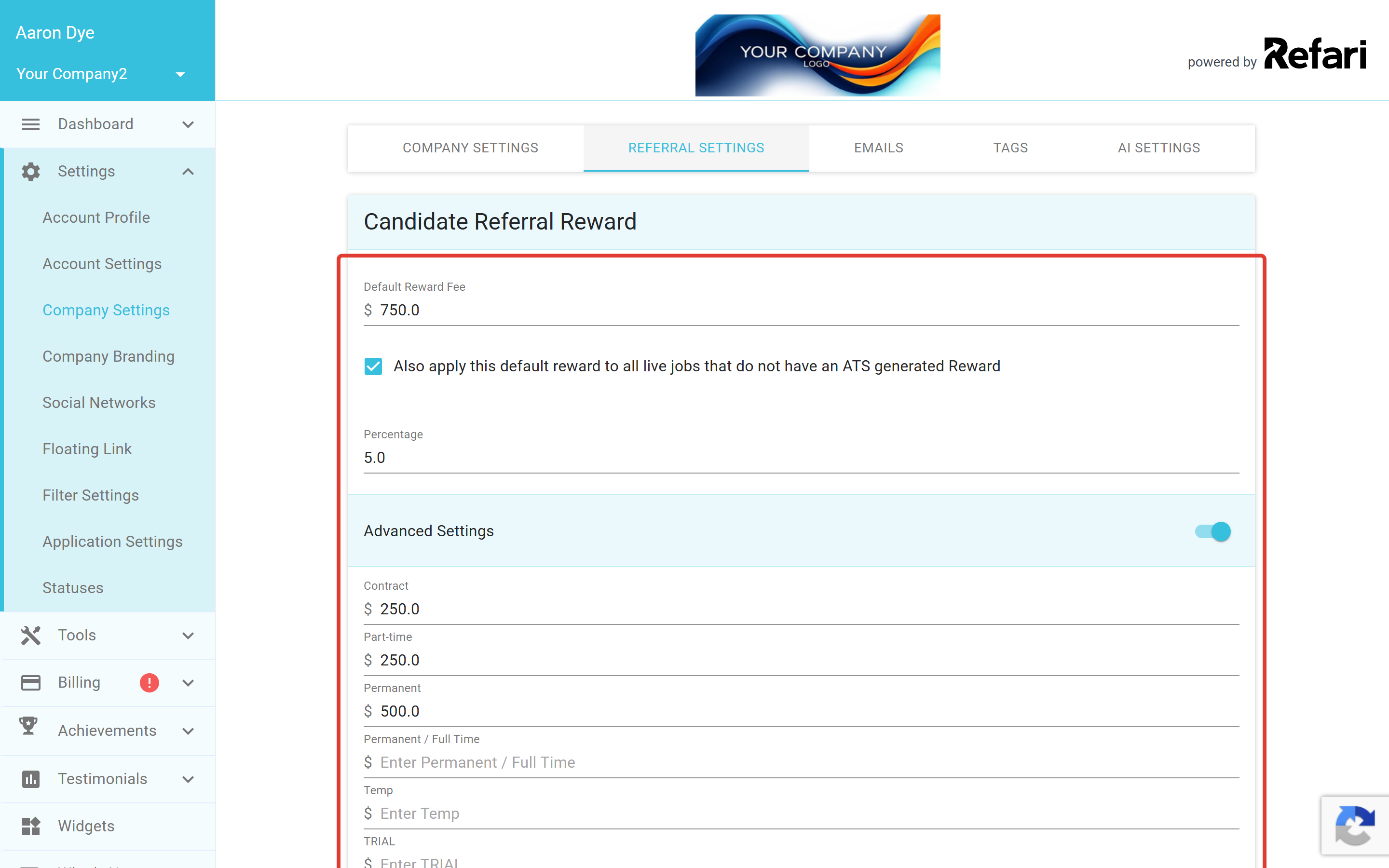
Note: Only Admins can change these settings. Managers can view them but not save changes, and Recruiters do not see the settings area.How referral rewards are calculated
Refari works out the reward for a job in a strict order, taking the first one that applies:
- Manual. A reward you set by hand on a specific job. This wins over everything else for that job, and it sticks even when the job re-syncs from your ATS.
- Percentage. A percentage of the job's expected placement fee (imported from your ATS), capped at your maximum reward.
- Work type. A set amount for the job's work type, if you use work-type rewards.
- Default. Your standard agency reward, used when none of the above apply.
See How to change a Job's Reward Fee ↗ to override a single job.
On timing, the simple answer is to pay as soon as the placement is made, and to build a small buffer into the reward to cover the occasional candidate who does not pass probation, rather than making referrers wait. See When should I pay a referral reward ↗.
Note: Refari logs and tracks the referral process and shows you the reward owed, but it does not handle the payment itself. You pay the referrer through your own process. The amount Refari shows is based on your current reward settings, so treat it as a guide.Candidate ownership and duplicate referrals
The ownership period does two jobs. It sets how long the referrer keeps receiving updates about their candidate, and it governs when someone else can refer the same candidate to you.
Refari treats two people with the same email address as the same candidate. If a candidate you already know is referred, whether you reward that referral is down to your own scheme terms, and what happens to ownership depends on how the referral came in and whether the previous referrer's ownership period has expired. See What happens if you already 'know' a referred candidate ↗.
Keeping your referrers in the loop
As you move a referred candidate through your process, Refari emails the referrer to keep them informed, from the moment you log or receive the referral through to a placement. This transparency is what keeps referrers engaged and referring again, even when a particular referral does not work out.
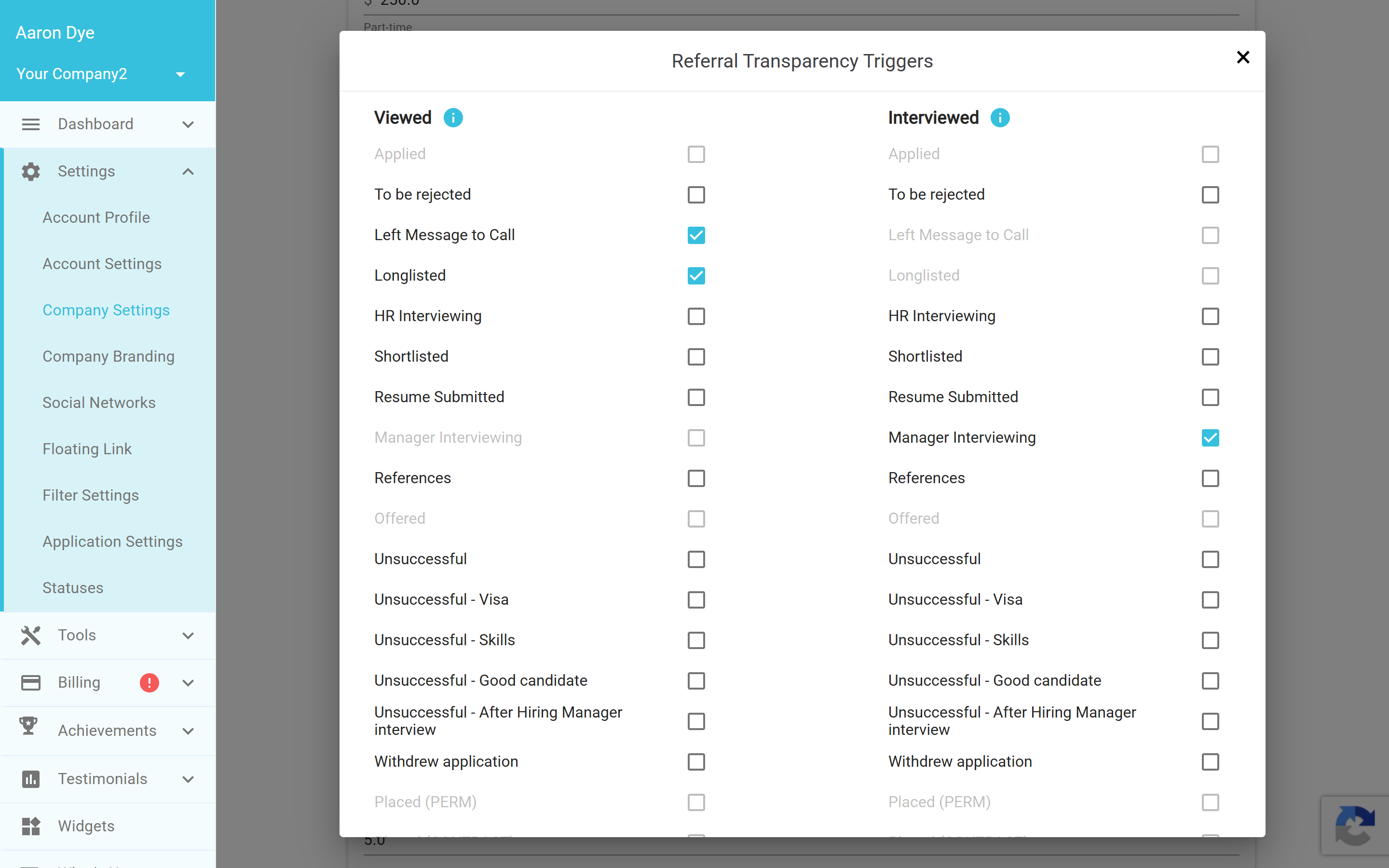
You control these updates with your transparency triggers: the pop-over where you map which of your statuses should let a referrer know their candidate has progressed (for example, viewed, interviewed, offered and placed). If you do not set any triggers, no transparency communications are sent. For the full detail on which updates are sent and how to set your triggers, see Referral transparency: the updates your referrers receive (and how to control them) ↗.
Working with your ATS
Refari integrates with your ATS, so your jobs, candidates, statuses and placements stay in sync without double handling. The transparency triggers you set map your ATS statuses to the updates your referrers receive, and if you run more than one Refari brand, each referral is routed to the right one.
You can also log a direct referral so it is tracked just like one made through your board, using the JobAdder partner action described earlier in this guide. To get the most out of the integration, it is worth setting up the JobAdder fields Refari can read: Fields you can enable to get the best use out of Refari with JobAdder ↗ covers which ones to enable and why. If you are wondering how quickly changes flow between the two systems, How often does Refari synchronise information with JobAdder ↗ explains the sync schedule.
Seeing and managing referrals in Refari
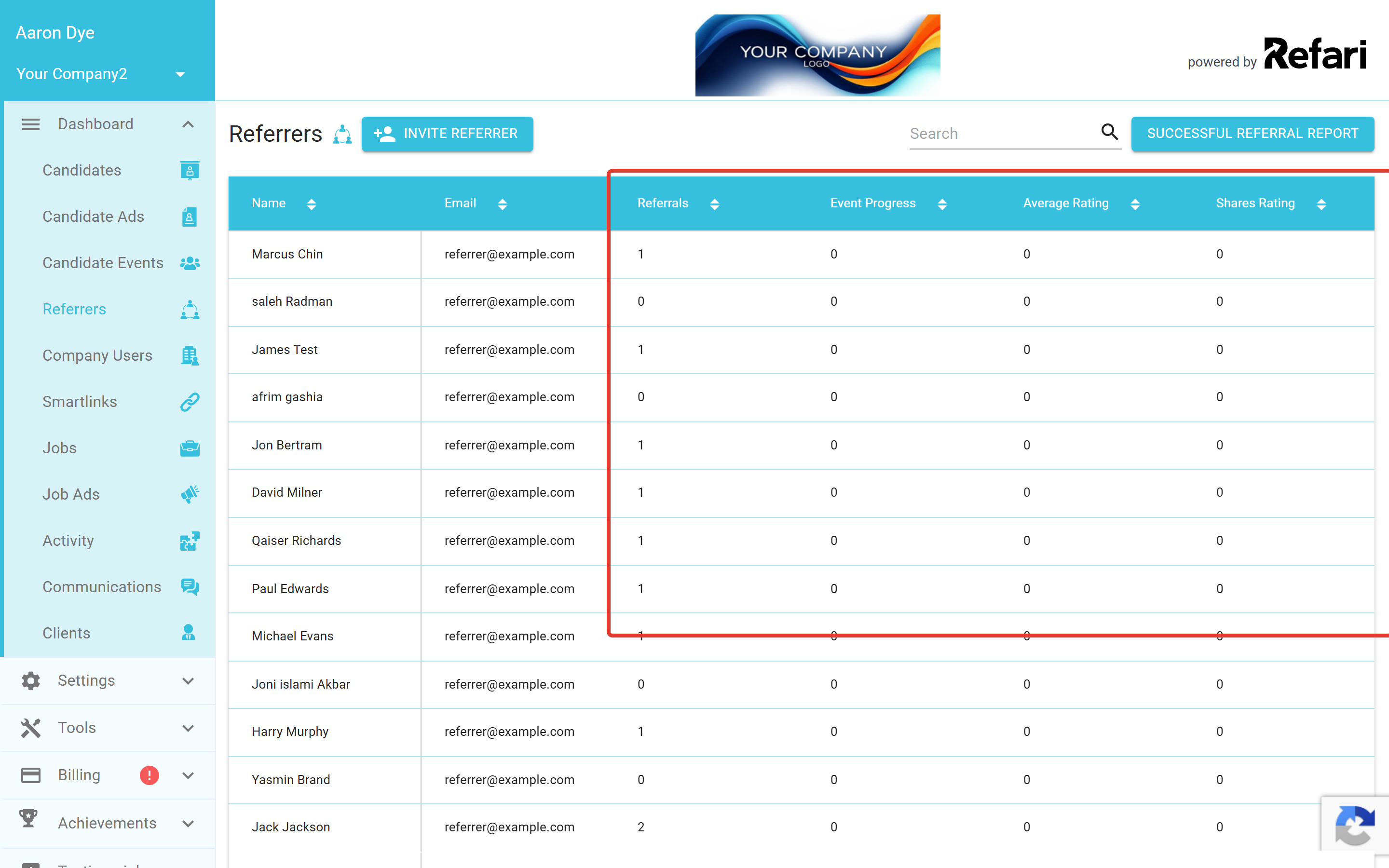
Inside Refari you can see every referral as it arrives and review the people sending them to you. For a closer look at both views, see Managing referrals in Refari: Candidate Events and your Referrers list ↗.
- Candidate Events is where new referrals land. From here you can rate how relevant a referral is and push the candidate into your ATS. The relevance rating builds each referrer's track record over time.
- Referrers is your list of everyone who has referred to you, with their number of referrals and their average ratings, so you can see who your most valuable referrers are.
Getting more referrals
Two things keep a referral scheme healthy. The first is talking about it, so people know they can refer. The second is making it a habit across your team, which is exactly what Refari's Achievement Badges encourage through the Referrals - Direct and Referrals - Web categories. To see how the badges work and how they motivate your team, read Achievement Badges: what are they for and how do they help ↗. For a wider set of tips on getting the most from Refari day to day, our Best practices with Refari ↗ guide is a good place to start.
Idea: Mention your referral scheme in your socialise posts, your email footers and your email signature. The more often people are reminded they can refer, the more referrals you receive.Final Notes
Candidate referrals work best when the basics are in place: a clear reward, an ownership period that matches your scheme terms, and transparency triggers set so referrers always know where their candidate is. With those configured, the rest runs in the background as you work your candidates as normal. If you would like a hand setting any of this up, the Refari team is happy to help.
Other articles you might be interested in: What are dynamic referral rewards and how do they work for recruitment agencies | What is candidate ownership period for referrals and how does it work | How to log a direct referral in JobAdder
Was this article helpful?
That’s Great!
Thank you for your feedback
Sorry! We couldn't be helpful
Thank you for your feedback
Feedback sent
We appreciate your effort and will try to fix the article